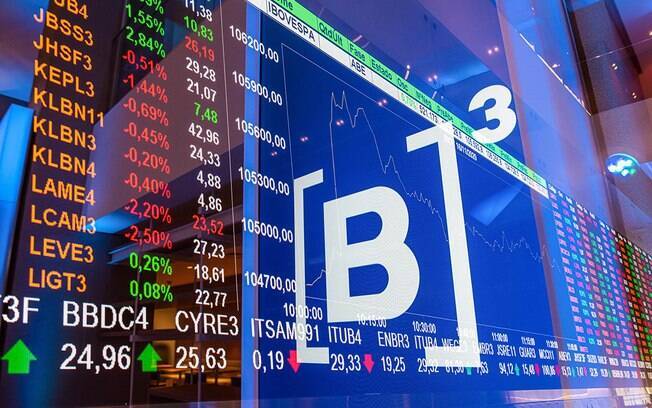
Main image suggestion: B3 trading floor or São Paulo skyline with financial overlay
Brazil’s stock market ended the week on a strong note. After two consecutive sessions of decline, the Ibovespa regained momentum this Friday (November 14, 2025), closing up 0.37%, at 157,738.69 points. The benchmark of the Brazilian market accumulated 2.39% in weekly gains — its fifth straight week in positive territory, reinforcing a broader risk-on sentiment among local investors.
A combination of rising oil prices, moderate optimism in global equities, and easing pressure on the U.S. dollar helped the index recover altitude. The move contrasted with the more volatile behavior seen earlier in the week and came despite mixed signals from the international environment.
Petrobras Supports the Rally as Oil Prices Jump

One of the key pillars of Friday’s performance was Petrobras (PETR3/PETR4). The state-controlled oil giant advanced more than 1%, riding the strong international appreciation of crude oil. Higher prices resurfaced after new geopolitical disruptions trimmed roughly 2% of global supply, according to market estimates.
The rally in Petrobras also reflected expectations surrounding the company’s upcoming five-year strategic plan. According to Bloomberg reports cited by the Brazilian press, the firm is evaluating a reduction of its investment budget to approximately US$ 106 billion for the 2026–2030 period. The potential adjustment has attracted investor attention, as it may indicate more disciplined capital allocation in an environment still marked by volatility in global energy markets.
Currency Reaction: Dollar Slips Against the Brazilian Real
The foreign-exchange market also contributed to the more positive tone. The commercial dollar closed at R$ 5.2973, edging down 0.02%. Over the week, the U.S. currency accumulated a drop of 0.73% against the Brazilian real. The retreat provided some breathing room for interest-sensitive and domestically focused sectors, following days of stronger currency swings.
Corporate Movers: From Braskem Optimism to Vale’s Pressure
Among corporate highlights in Brazil:
- MBRF3 led the daily gains in the Ibovespa, jumping more than 10%, and was also the week’s biggest winner with a surge above 32%.
- Braskem (BRKM5) rose and touched R$ 8, supported by expectations of a potential agreement involving creditor banks, Novonor, and IG4 Capital for the sale of the company’s controlling stake.
- Vale (VALE3) moved in the opposite direction. The miner ended the session lower despite iron ore stability, pressured by the fallout from a U.K. court ruling against BHP over the 2015 Fundão dam disaster in Mariana, Minas Gerais. Vale announced an additional US$ 500 million provision in its 2025 financial statements to comply with legal requirements — a development that weighed heavily on the stock.
- On the negative end of the index, Yduqs (YDUQ3) declined after releasing its third-quarter results, which analysts described as only “reasonably in line” with expectations.
- For the week, Hapvida (HAPV3) recorded the worst performance of the theoretical portfolio, with a sharp decline of around 40%.
Global Markets: Wall Street Mixed, Europe and Asia Retreat
In the United States, major equity indices closed without a single direction.
- Nasdaq: +0.13%
- S&P 500: -0.05%
- Dow Jones: -0.65%
Tech stocks showed modest recovery after Thursday’s heavier losses. Analysts noted that investors appear to be repositioning for the final stretch of 2025, especially ahead of a data calendar that had been delayed by the recent U.S. government shutdown. The U.S. Bureau of Labor Statistics confirmed that September’s employment report will finally be released next Thursday (November 20).
Monetary policy also continues to dominate global sentiment. Jeffrey Schmid, president of the Kansas City Federal Reserve, emphasized that stubborn inflation and structural shifts in the labor market reduce the space for new rate cuts — remarks that dampened expectations for monetary easing.
In Europe, major indices fell, affected by concerns about a potential AI-driven market bubble and U.S. monetary uncertainty. The Stoxx 600 dropped 0.61% but still posted its strongest weekly performance since late September.
In Asia, Japan’s Nikkei declined 1.77%, and Hong Kong’s Hang Seng retreated 1.85%, reflecting growing caution across regional markets.
Brazil in the Geopolitical Mix: Tariffs and Diplomacy
For Brazil, the global discussion on trade policy carries additional significance. The U.S. Trade Representative, Jamieson Greer, signaled that Washington may roll back certain tariffs on goods not produced domestically — such as coffee, bananas, and cocoa — which could benefit Brazilian exporters. Diplomatic channels remain active: Foreign Minister Mauro Vieira met with U.S. Secretary of State Marco Rubio in Washington this week to address tariffs and sanctions involving Brazilian citizens, including members of the judiciary.
Retail and Domestic Indicators
Brazil’s retail sector experienced a mixed third quarter, influenced more by unpredictable weather patterns than by economic fundamentals, according to Goldman Sachs. While high interest rates of around 15% pressured indebted consumers, middle- and high-income households sustained activity.
Magazine Luiza (MGLU3) climbed 5.85%, while Lojas Renner (LREN3) advanced 2.23%.
The coming week begins with the release of the IBC-Br, the Brazilian GDP proxy for September, and renewed expectations for the resumption of delayed U.S. economic indicators — both of which could influence the short-term direction of the Brazilian market.
Brazil’s Ibovespa ends the week on solid ground — supported by Petrobras, helped by global relief, and anchored by resilient domestic flows.