
Delegations report structural issues, heat discomfort, and operational risks that are already affecting the event’s image in Belém.
UN Demands Emergency Plan and Highlights “Serious Breaches” in Security
The United Nations has increased pressure on the Brazilian government after a series of security and infrastructure failures during the first days of COP30 in Belém. In a letter addressed to Chief of Staff Rui Costa and conference president André Corrêa do Lago, UNFCCC Executive Secretary Simon Stiell described the incidents as alarming and demanded immediate corrective measures.
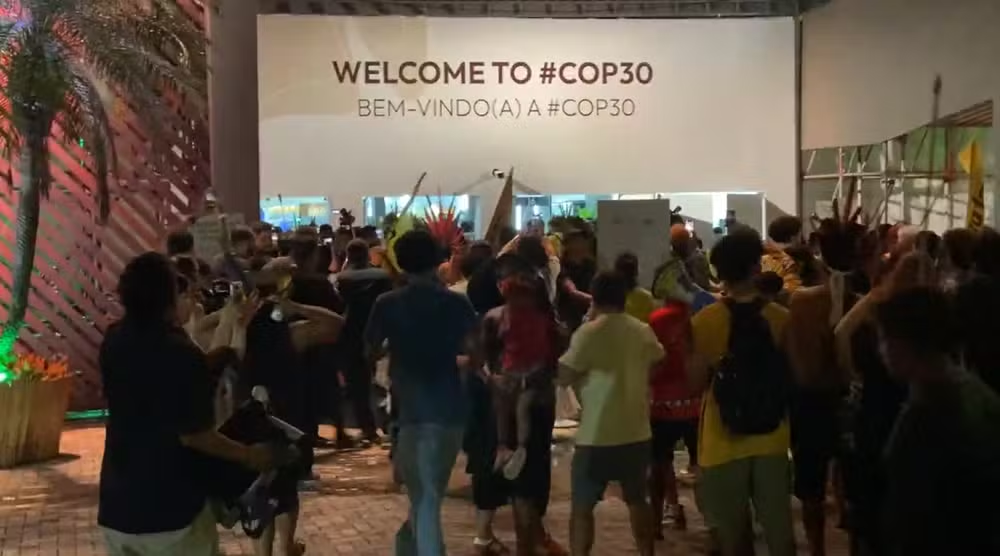
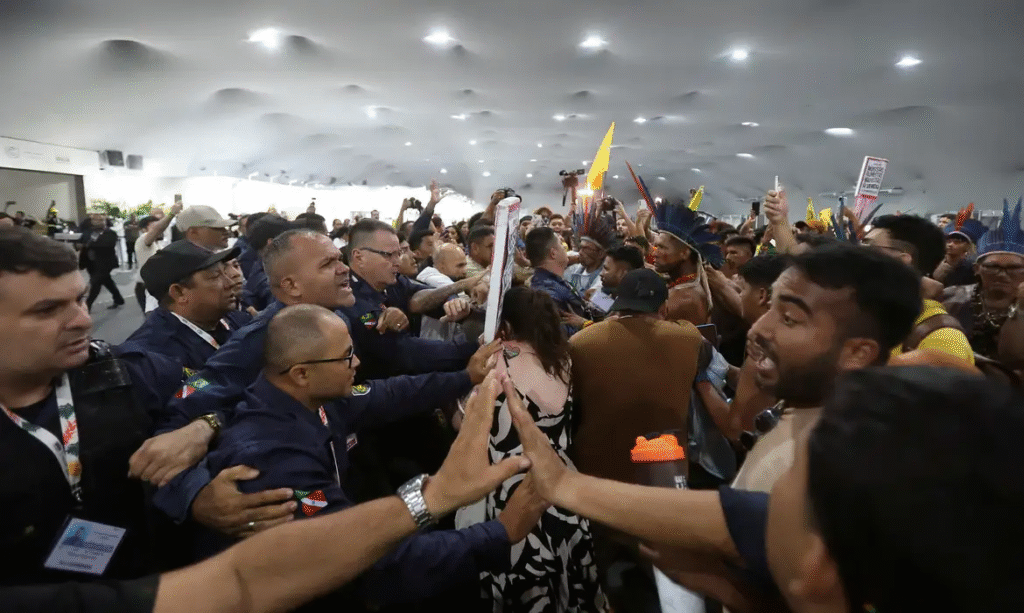
The trigger was an attempted invasion on the evening of November 11, when around 150 activists entered internal pavilion doors and advanced toward areas reserved for delegates. The episode left two security officers injured, caused structural damage and exposed weaknesses in the control of the Blue Zone, a restricted-access area.
Despite the presence of police forces, the UN reported that the security contingent failed to contain the initial action, and new demonstrations occurred the following morning — again inside an area that should have been protected.
Stiell listed several critical vulnerabilities: unmonitored entrances, insufficient security personnel, and a lack of guaranteed rapid response from federal and state authorities. The message came with a firm request: a detailed plan to be presented to all delegations by the end of the day.
Structural Failures Raise Concerns and Frustrate Delegations
The protests were not the only source of tension. The UN also pointed to operational flaws observed in recent days — many already noticed by international delegations.
The issues include:
- excessive heat in pavilions,
- malfunctioning air conditioning systems,
- leaks caused by rainfall,
- water found near electrical installations, raising the risk of short circuits.
Delegates from multiple countries voiced concerns about the working conditions inside the conference offices, increasing pressure on organizers. Reports mentioned thermal discomfort, equipment problems and water infiltration in sensitive areas such as the Media Center and a health station.
The Brazilian Chief of Staff disputed parts of the criticism, asserting that new cooling units had been installed, technical teams reinforced and that the leaks were localized drips, not widespread flooding. According to the government, damage resulted from a broken gutter, which has since been repaired.
Government Responds With Reinforcement and Coordination With the UN
In response to the escalating situation, the Chief of Staff stated that all UN requests are being met. The office emphasized that internal security within the Blue Zone is the responsibility of the UN’s Department for Safety and Security (UNDSS).
Government agencies and UNDSS held an emergency meeting to restructure the event’s security layout. Announced measures include:
- expanding the Orange and Red security perimeters,
- installing additional barriers and metal fencing,
- reinforced security presence from the National Force and Federal Police,
- an expanded buffer zone between the Blue and Green areas to prevent new incidents.
At the UN’s request, Brazil’s Federal Police opened an investigation and began reviewing internal and external video footage from the pavilion.
Despite the turbulence, sources reported that climate negotiations remain unaffected, a key concern for Brazilian diplomats.
Health and Climate March Denies Involvement; Demonstrations Continue
On the same day as the attempted invasion, Belém hosted the Global Health and Climate March, which gathered around 3,000 participants, including health professionals, students, Indigenous leaders and social movements. Organizers stated they had no connection to the turmoil at the Blue Zone.
The march ended peacefully at the entrance of the COP30 site. Later, another group carrying student flags attempted to enter restricted areas and was promptly stopped by security officers.
The UN reaffirmed that the venue “remains fully secure” and that negotiations continue normally. COP30 organizers stressed that all necessary measures are being implemented and highlighted that security protocols are coordinated jointly with the United Nations.
Global Pressure Mounts and Puts Brazil on Alert
The crisis unfolds after months of concern about Belém’s infrastructure. Prior to the conference, negotiators from several countries had signed a letter urging the Brazilian government and Simon Stiell to consider relocating part of the event, citing high lodging costs and limited infrastructure capacity.
Now, amid protests, security breaches and structural issues, the federal government is racing to demonstrate control. The UN, meanwhile, signals that it will closely monitor all corrective actions — insisting on transparency and swift solutions.