
Brazil Sees Immediate Relief for Key Export Sectors
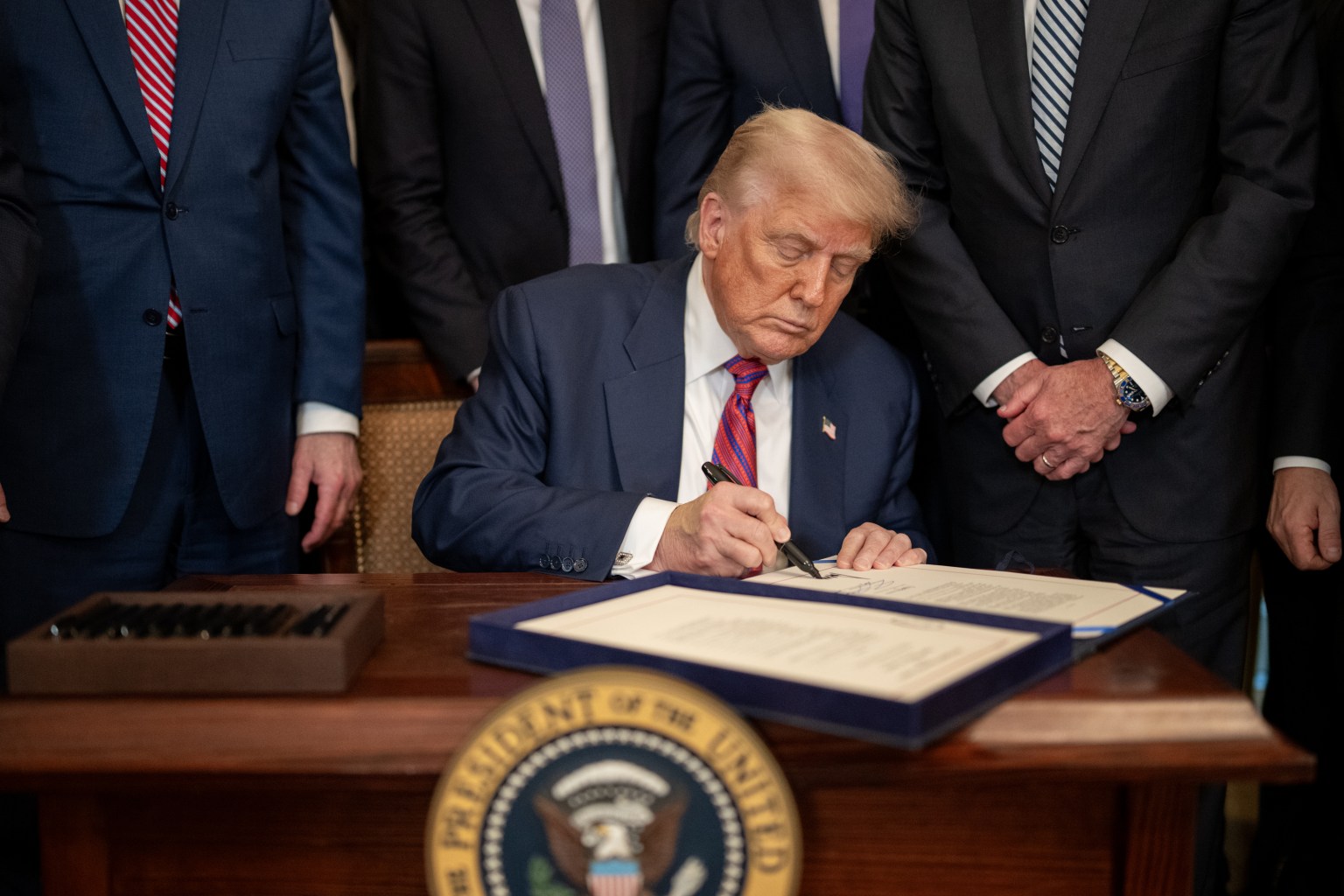
The United States government announced on Friday (Nov. 14) a broad suspension of tariffs on imported agricultural and food products, marking one of the most significant reversals of President Donald Trump’s current trade policy. The decision removes the 10% reciprocal tariff imposed in April and affects essential items such as coffee, beef, tomatoes, bananas, açaí and several tropical fruits — many of which are core exports for Brazil.
The executive order, effective retroactively from 12:01 a.m. Thursday (Nov. 13), was issued following technical assessments and internal recommendations. According to the White House, the measure takes into account domestic production capacity, internal demand, ongoing trade negotiations and the real impact of tariffs on consumer prices.
Despite the relief, the additional 40% surcharge specifically imposed on Brazilian products in July remains in place, keeping several export sectors under pressure.
🟨 A political and economic shift driven by inflation
The rollback comes amid growing public frustration with rising food prices in the U.S. Recent Consumer Price Index data shows ground beef up almost 13%, steak prices up nearly 17%, bananas up 7%, and tomatoes up 1% compared with last year. Overall, at-home food costs rose 2.7% in September.
Although Trump has repeatedly insisted that his tariffs were not contributing to inflation, the political climate changed sharply after Democrats scored notable victories in state and local elections in Virginia, New Jersey and New York — all dominated by debates about the cost of living.
Reuters described the move as a “major reversal,” pointing out that economists attribute part of the food-price surge to Trump’s import tariffs. Analysts warn that prices could rise further in 2026 as businesses begin fully passing the cost of tariffs onto consumers.
Democratic congressman Richard Neal criticized the administration, saying the government was “putting out a fire they started,” arguing that tariffs fueled inflation and contributed to months of declining manufacturing activity.

Immediate impact on Brazil
Brazil stands among the biggest winners of the tariff rollback. The U.S. is the second-largest trading partner of Brazil, and the tariff hike introduced earlier this year hit multiple sectors hard.
Brazil supplies about one-third of all coffee imported by the U.S., but shipments plunged 47% in September following the tariff increases. Beef exports also suffered, even as the U.S. faces its smallest cattle herd in 74 years, a key factor behind soaring domestic meat prices.
Tropical fruit producers — especially mango and guava exporters — had cargo stranded and orders canceled after Washington’s tariff escalation.
Countries like Argentina, Ecuador, El Salvador and Guatemala will also benefit, especially after the U.S. signaled broader tariff reductions tied to agreements announced earlier this week.
Reaction from the Brazilian government
The announcement triggered immediate response in Brasília. Institutional Relations Minister Gleisi Hoffmann celebrated the decision as a “victory for Brazil,” crediting President Luiz Inácio Lula da Silva’s diplomacy. Agriculture Minister Carlos Fávaro called the move a sign that “dialogue has returned,” while senior adviser Celso Amorim said he hoped the shift would pave the way for discussions on manufactured goods as well.
However, Brazil’s Ministries of Economy, Industry and Agriculture are still reviewing the executive order to clarify the exact scope of tariff suspensions, particularly because the additional 40% tax on Brazilian goods remains unchanged.
Behind the scenes, Foreign Minister Mauro Vieira met twice this week with U.S. Secretary of State Marco Rubio — first in Canada and then in Washington — and expressed optimism that an initial agreement could be reached this month. Such an arrangement would serve as a roadmap for broader negotiations over the next two to three months.
A broader list with global implications
The new measures go beyond agriculture. The executive order also suspends tariffs on industrial inputs, chemicals, minerals and technology — including copper, aluminum, fertilizers, vitamins, semiconductors and integrated circuits.
According to the White House, the decision reflects “substantial progress” in reciprocal trade discussions and aims to adjust the tariff framework to the real supply and demand needs of the U.S. economy. Many of the suspended items are not produced domestically in sufficient quantities to meet American consumption.